


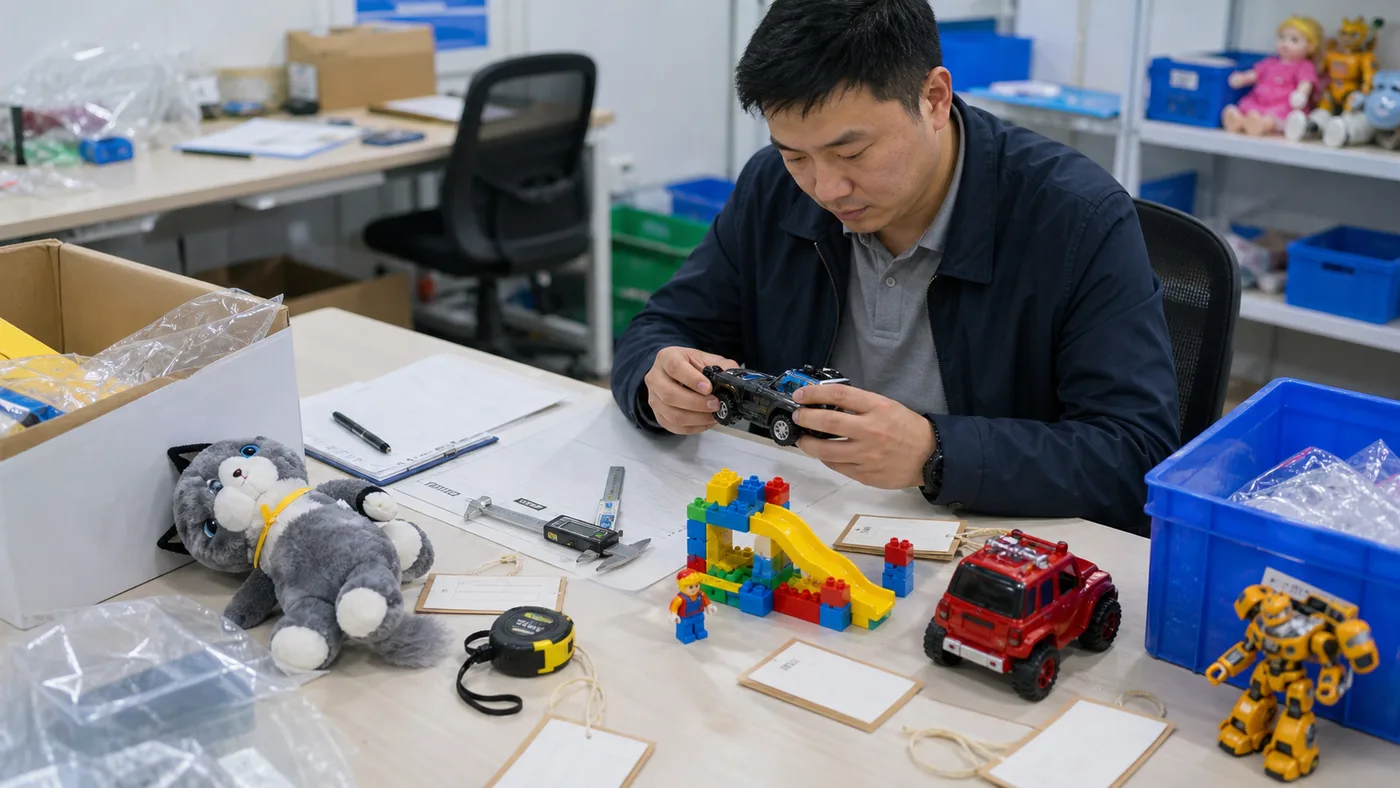
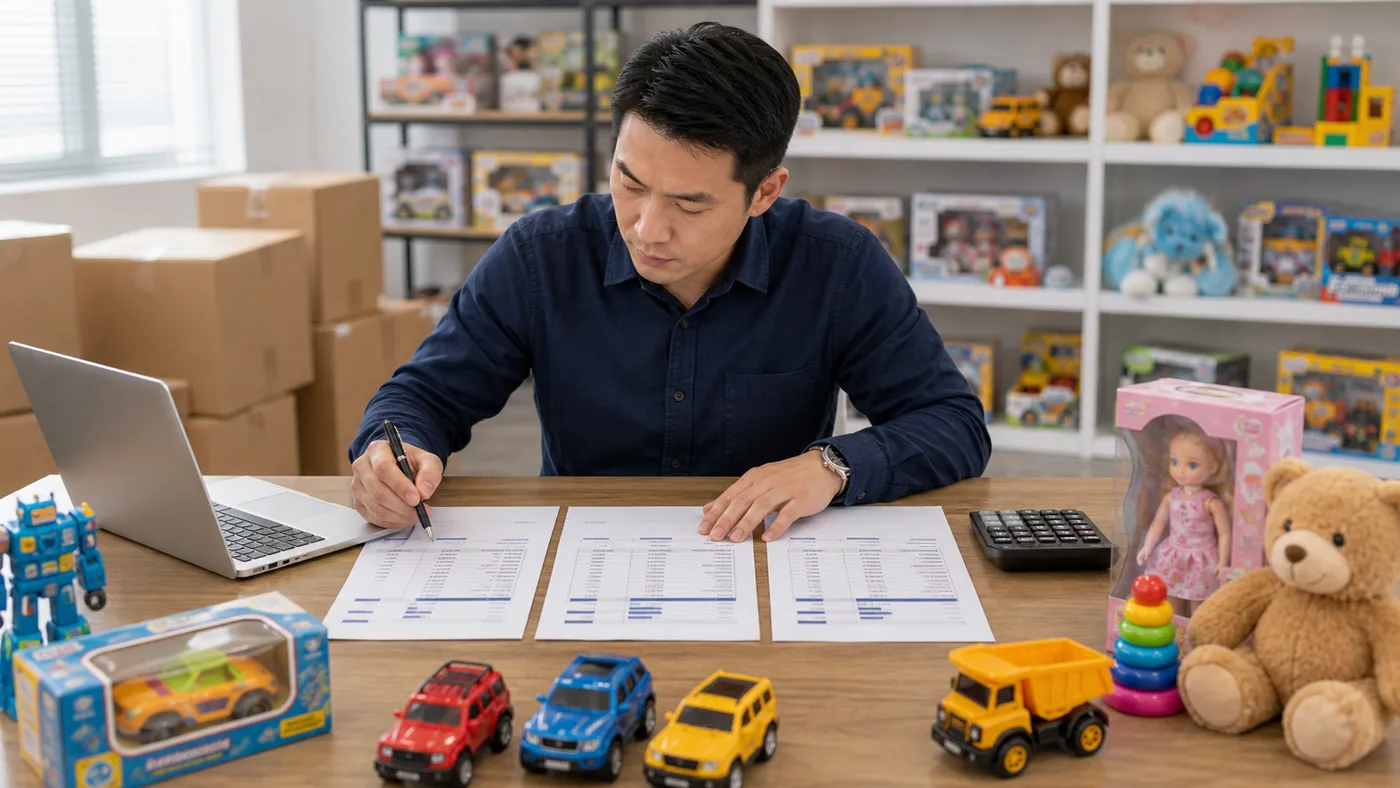
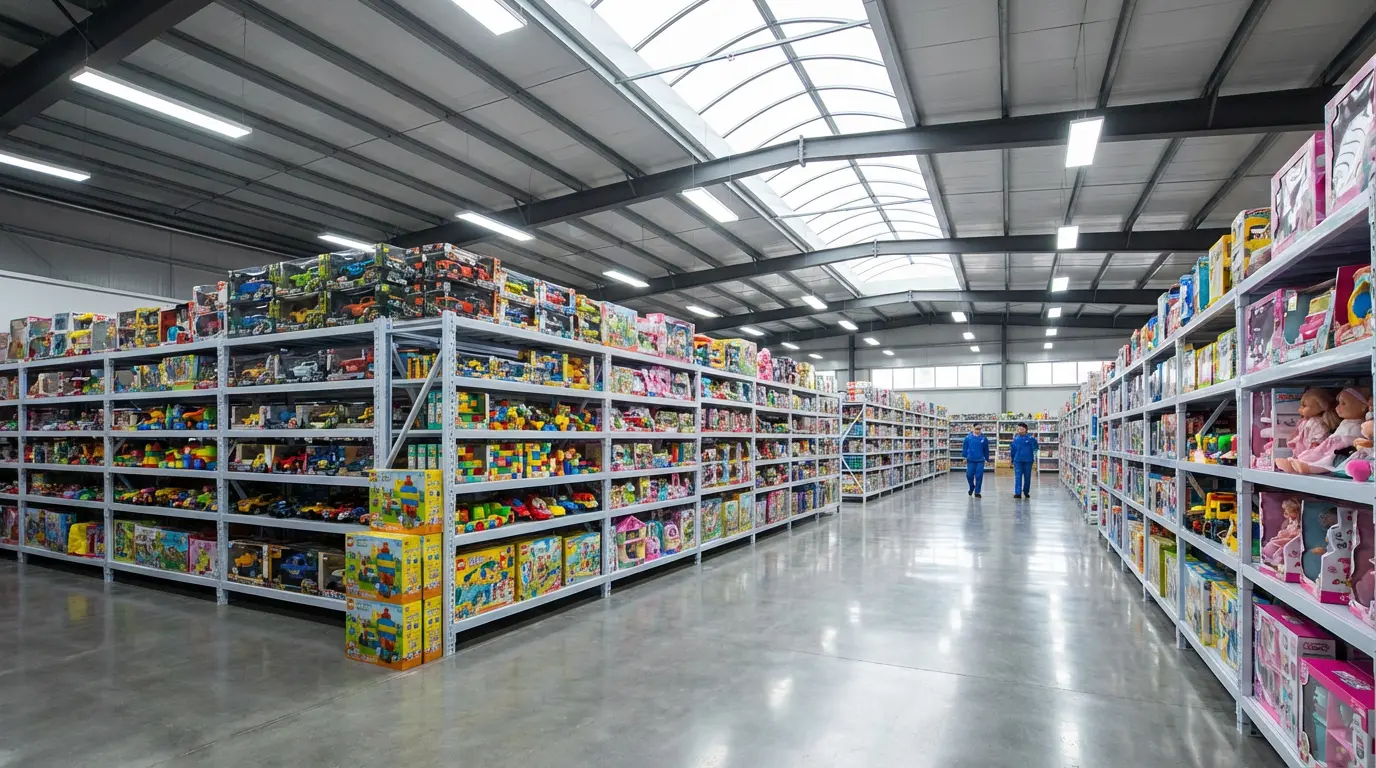
Many toy importers ask for a product quotation first and think about packaging later. This is one of the easiest ways to get an inaccurate price.
For toys, packaging is not just a box around the product. It can change the unit cost, MOQ, carton size, shipping cost, retail presentation, labeling requirements, and production timeline. A toy packed in a simple poly bag will not have the same cost structure as the same toy packed in a printed retail box, boîte d'affichage, blister card, or custom branded package.
If you are sourcing toys from China, it is better to confirm the packaging direction before requesting a final quotation. This guide explains how to choose between retail box, boîte d'affichage, bulk pack, poly bag, blister card, and custom packaging based on your product, sales channel, target market, and budget.
Not sure which packaging option fits your toy order?
Send LuluFamily your product type, target market, quantité commandée, and sales channel. We can help compare bulk pack, retail box, boîte d'affichage, and custom packaging before you request a final quote. Contact LuluFamily about toy packaging.
Why Toy Packaging Should Be Decided Before the Final Quote
Packaging changes the real cost of a toy order in several ways.
D'abord, it changes the material and printing cost. A plain poly bag may be simple, but a printed retail box may require artwork, a dieline, color proofing, printing plates, and a minimum printing quantity.
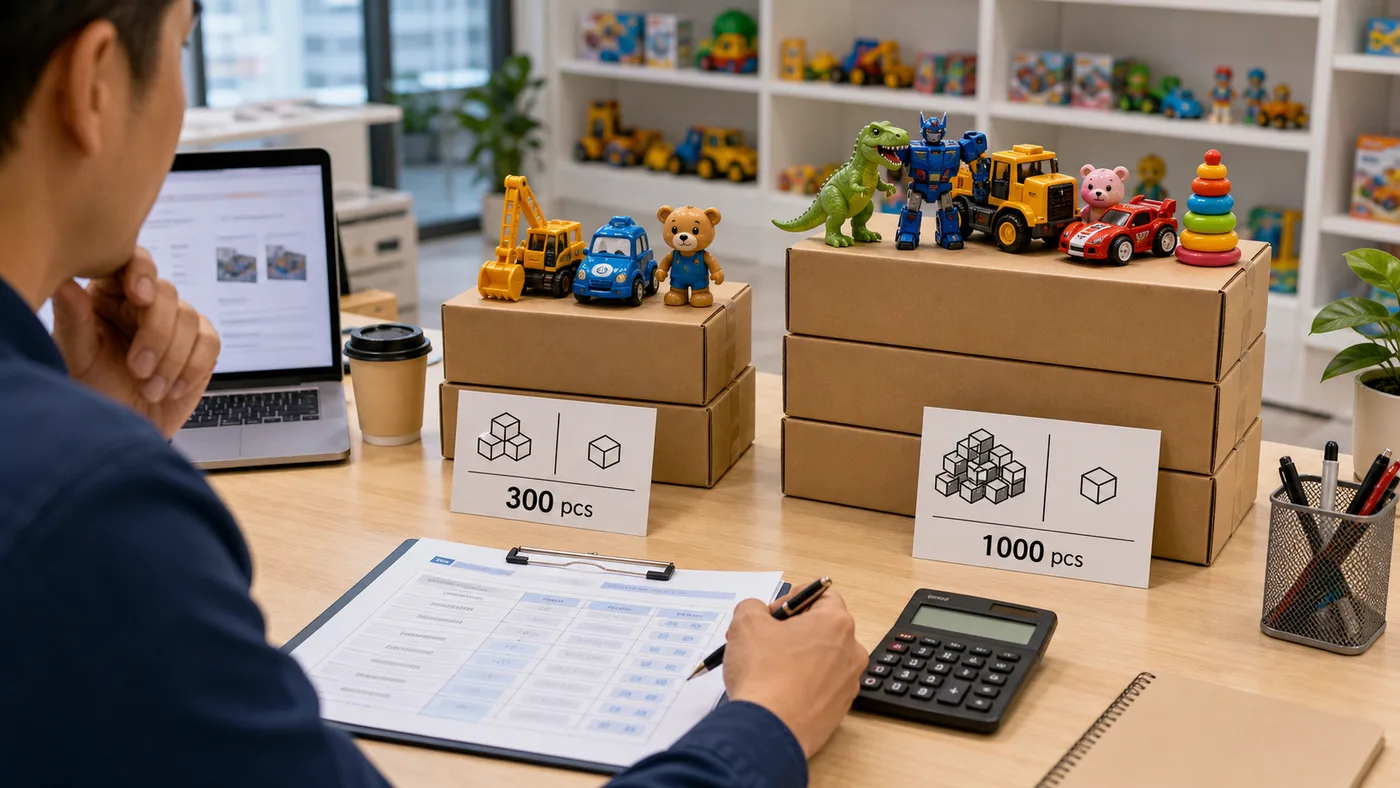
Second, it changes carton efficiency. A larger retail box may look better on the shelf, but it can reduce the number of units per carton and increase CBM. This affects sea freight, fret aérien, courier cost, warehouse storage, and Amazon fulfillment fees.
Third, it affects production timing. Custom packaging may need artwork approval, sample making, printing, inner tray testing, barcode checking, and final carton confirmation before mass production.
Fourth, it affects compliance and inspection. Age grading, warnings, tracking labels, importer information, battery warnings, and country-of-origin marking may need to appear in the right place.
A supplier cannot give a reliable final quotation if the packaging method is still unclear. Before comparing suppliers, importers should define how the toy will be packed, displayed, shipped, and sold.
Common Toy Packaging Options for Importers
Different toy packaging formats solve different business problems. The best choice depends on product type, sales channel, target market, quantité commandée, retail display needs, and shipping cost.
Emballage en vrac
Bulk pack means multiple toys are packed together in a master carton without individual retail packaging.
This option is common for wholesalers, distributeurs, promotional buyers, and low-cost toy assortments. It keeps packaging costs low and improves carton efficiency.
The limitation is clear: bulk pack is not suitable if each toy needs to be sold directly on a retail shelf.
Poly Bag
A poly bag is a simple plastic bag used for individual toy packing. It is common for small toys, accessories, loose parts, and budget products.
Poly bags are lightweight and cost-effective. They are also useful when the buyer wants simple protection without full retail packaging.
Cependant, they offer limited branding and weaker product presentation. If the toy is for children, warning labels and safety requirements should be checked carefully.
Retail Box
A retail box is designed for individual product sales. It usually includes product images, features, age grade, barcode, warning information, and branding.
This is a good option for toy stores, boutiques de cadeaux, online shops, and branded products. It makes the toy easier to display, explain, and sell.
Compared with bulk pack or poly bag, retail boxes usually increase unit cost, packaging MOQ, carton volume, and production time.
Window Box
A window box allows customers to see the toy inside. It is often used for dolls, petites voitures, jouets éducatifs, gift toys, and some RC toys.
This packaging improves shelf appeal because shoppers can see the actual product before buying. It works well when the toy’s appearance is a major selling point.
The trade-off is cost and protection. Window boxes may need stronger structure and better carton planning to avoid damage during transportation.
Boîte d'affichage
A display box is designed to hold multiple units and present them on a shelf or counter. It is common for small toys, blind box items, collectibles, capsules, mini voitures, and impulse-buy products.
For supermarkets, convenience stores, and gift shops, display boxes can make products easier to sell in batches. They also help retailers manage shelf space.
Display boxes need careful planning. The supplier should confirm how many units fit in each display box and how the display box fits into the master carton.
Blister Card
Blister card packaging combines a plastic shell with a printed card. It is often used for small toys, figurines d'action, petites voitures, accessories, and hanging retail products.
It gives good product visibility and works well for retail racks. It can also protect small parts better than a simple bag.
Buyers should consider plastic material, mold cost, card printing, assembly cost, and market compliance requirements before choosing this option.
Custom Packaging
Custom packaging includes branded boxes, special structures, gift packaging, private label packaging, inserts, manuals, and customized retail presentation.
This option is best for brand owners, Vendeurs Amazon, chain stores, and buyers who want a stronger brand image.
Custom packaging should be planned early. It usually requires artwork confirmation, dieline checking, sample approval, higher MOQ, longer lead time, and more detailed inspection.
Retail Box vs Display Box vs Bulk Pack: Which One Should You Choose?
Different packaging options solve different business problems. A distributor, an Amazon seller, and a supermarket buyer may choose different packaging even for the same toy.
If your priority is low-cost distribution, bulk pack may be enough. If your product will be sold individually in stores, a retail box or display box is usually better. If you are building a private label toy brand, custom packaging should be part of the sourcing plan from the beginning.
Before choosing between retail box, boîte d'affichage, and bulk pack, buyers should ask the supplier for carton quantity, carton size, gross weight, net weight, and CBM. A package that looks cheaper per unit may become more expensive after freight and storage costs are included.
How Sales Channels Affect Toy Packaging Choices
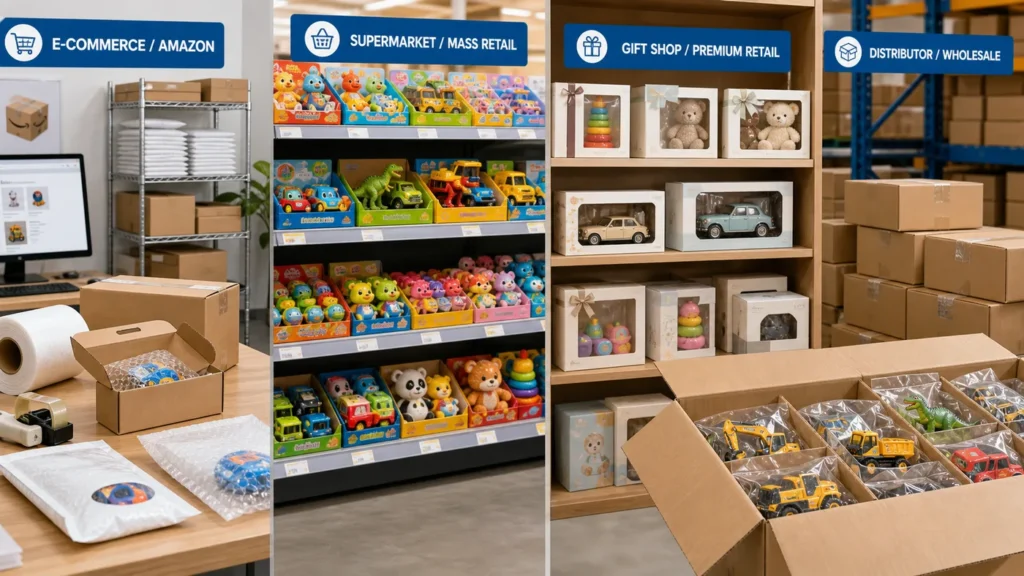
Packaging should match the way the toy will be sold.
For Amazon and e-commerce sellers, packaging should protect the toy during delivery, reduce unnecessary volume, and include clear barcode and product information. Oversized packaging may increase storage and fulfillment costs.
For supermarkets and chain stores, packaging must support shelf display. Retail boxes, display boxes, blister cards, and hanging cards are often better choices because shoppers make quick purchase decisions in-store.
For gift shops, packaging should look attractive and gift-ready. Window boxes, colorful retail boxes, and custom packaging can help improve perceived value.
For wholesalers and distributors, the priority is usually cost, carton efficiency, and easy sorting. Bulk pack, simple box packaging, or mixed carton solutions may be more practical.
For promotional buyers, packaging often needs to balance low cost and simple presentation. A poly bag, header card, or simple color box may be enough.
How Toy Type Affects Packaging Decisions
Toy category also matters. The same packaging format does not work for every product.
Plush toys may use poly bags, hang tags, display boxes, or vacuum packaging depending on shipping and retail needs. A gift-style plush toy may benefit from a retail box, but the larger package can increase freight cost.
RC toys often need stronger boxes because the product may include electronic parts, controllers, piles, and accessories. A window box or sturdy color box can show the product while protecting it during transport.
Educational toys and building sets often need retail boxes because buyers want to understand the learning value, age grade, number of pieces, and product features before purchase.
Small toys, capsules, blind boxes, and collectibles are often suitable for display boxes because they are commonly sold near checkout counters or in high-volume retail settings.
Fragile toys, toys with multiple parts, and battery-operated toys may need inserts, inner trays, ties, or reinforced carton planning to reduce damage during shipment.
What Information Should Be Printed on Toy Packaging?
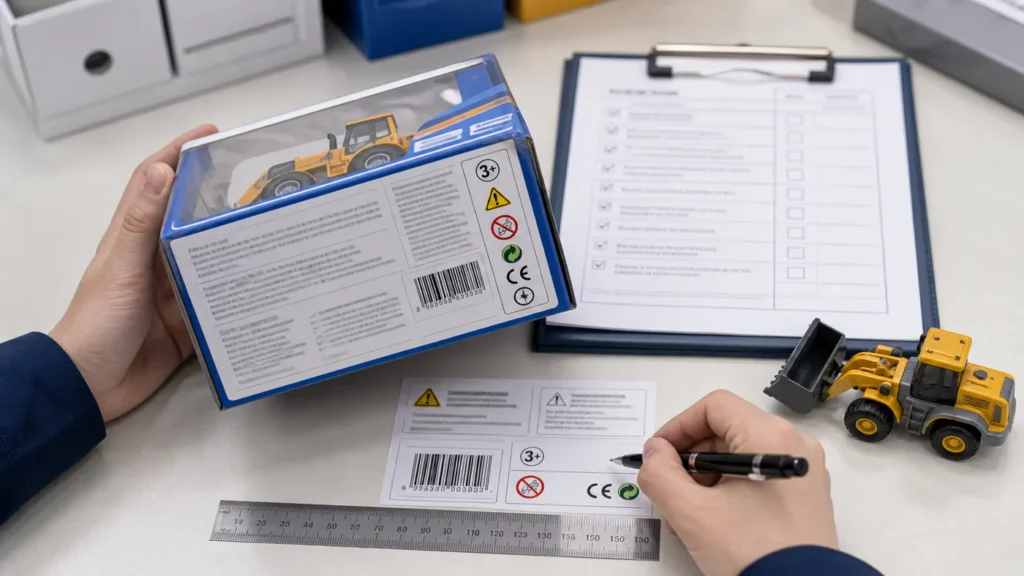
Toy packaging may need both commercial information and compliance-related information.
Commercial information may include:
– Nom du produit
– Item number
– Brand name
– Product image
– Caractéristiques
– Quantité
– Code à barres
– Instructions
– Country of origin
Compliance-related information may include:
– Age grading
– Warning statements
– Choking hazard warnings
– Battery warnings
– Tracking label information
– Importer or responsible party details
– CE or UKCA marking where applicable
– Other market-specific labeling requirements
Importers should not treat CE, ASTM F963, CPSIA, and EN71 as the same type of packaging mark. Some are standards, some relate to testing or certification, and some may affect labeling or documentation. The correct requirement depends on the product and destination market.
For a deeper document checklist, read Toy Compliance Documents:
https://lulufamily.com/toy-compliance-documents/
Packaging Sample Approval Process Before Production
Custom toy packaging should not go directly from artwork to mass production.
A safer approval process is:
1. Confirm the packaging type and structure.
2. Prepare the dieline.
3. Check artwork, spelling, barcode, warning text, and importer information.
4. Produce a white sample if the box structure is new.
5. Produce a color sample or digital proof for printed packaging.
6. Put the real toy and accessories into the package.
7. Check whether the product moves, bends, scratches, or breaks inside the packaging.
8. Confirm inner tray, ties, bags, manuals, and accessories.
9. Confirm master carton size, quantité, and packing method.
10. Approve the final packaging sample before mass production.
For products sold online, also consider delivery protection. A retail box that looks good on the shelf may still need an outer shipping carton or stronger internal support if it will be shipped directly to consumers.
For pre-production review, read Toy Samples Checklist Before Bulk Production:
https://lulufamily.com/toy-samples-checklist-before-bulk-production/
How Packaging Affects Cost, MOQ, Lead Time, and Shipping
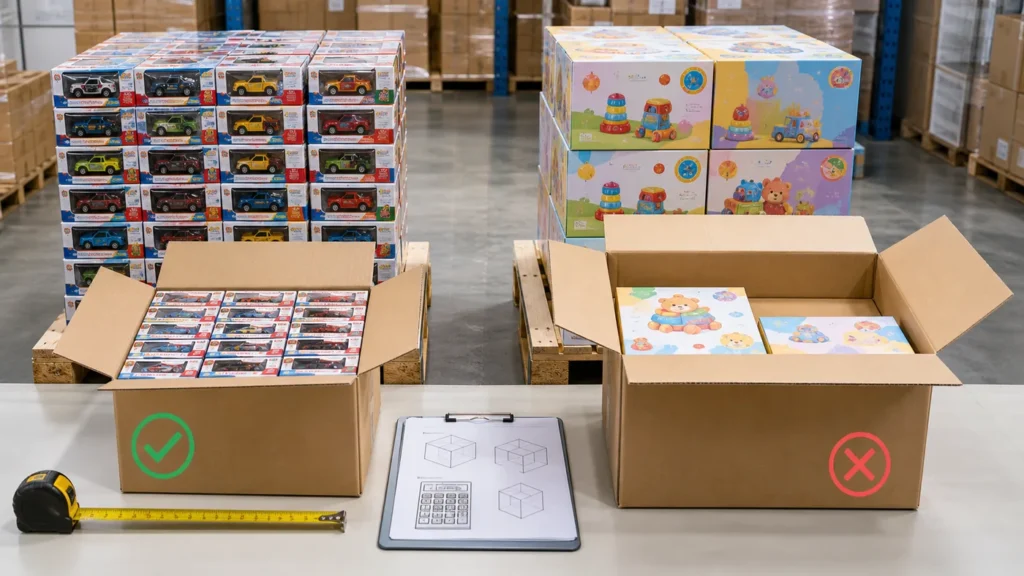
Toy packaging can change both the quoted unit price and the landed cost.
A supplier may have a product MOQ and a separate packaging MOQ. Par exemple, a stock toy may support a smaller order quantity, but printed packaging may require a higher minimum because the printing factory needs to run a minimum batch.
Custom packaging may also create extra costs, including artwork adjustment, dieline setup, printing plates, color proofing, inner trays, inserts, manuals, barcodes, and packaging samples.
Lead time can also change. Bulk pack and standard packaging are usually faster. Custom color boxes, window boxes, display boxes, and blister packaging may require additional approval and printing time.
Shipping cost is often affected by carton volume. Before choosing a packaging option, importers should ask for:
– Units per inner box
– Units per master carton
– Taille du carton
– Gross weight
– Net weight
– CBM
– Packaging dimensions
– Whether the product can pass basic transport handling
A beautiful retail package is not always the best commercial choice if it makes the carton too large or increases damage during shipping.
Packaging Specification Sheet Importers Should Send to Suppliers
A packaging request should be written clearly before the supplier prepares a final quote.
A practical packaging specification should include:
| Article | What to Confirm |
|---|---|
| Produit | Item number, product name, product size, product weight |
| Packaging type | Bulk pack, poly bag, retail box, boîte d'affichage, blister card, custom box |
| Sales channel | Amazon, supermarket, gift shop, distributor, promotion, de gros |
| Target market | NOUS, UE, ROYAUME-UNI, Canada, Australie, Moyen-Orient, or other market |
| Branding | Logo, couleur, artwork, private label, instruction manual |
| Labeling | Code à barres, age grade, warning text, importer information, country of origin |
| Protection | Inner tray, insert, ties, mousse, bag, reinforced carton |
| Carton | Units per carton, carton size, gross weight, net weight, CBM |
| Sample approval | White sample, color sample, pre-production sample |
| Inspection | Packaging appearance, barcode scan, carton drop risk, packing quantity |
This sheet helps suppliers quote the same requirement. It also prevents the common problem where one supplier quotes a simple box while another supplier quotes a printed retail package.
For quotation comparison, read How to Compare Toy Quotations from Different Chinese Suppliers:
https://lulufamily.com/how-to-compare-toy-quotations-from-different-chinese-suppliers/
Packaging Checklist Before Placing a Wholesale Toy Order
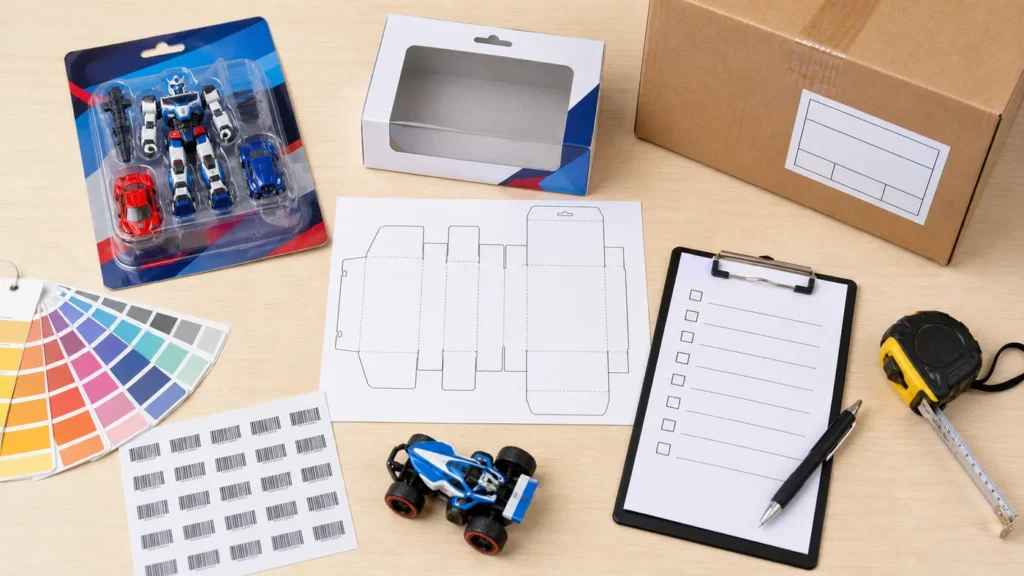
Before placing a wholesale toy order, importers should confirm these packaging details with the supplier.
Packaging type: bulk pack, poly bag, retail box, boîte d'affichage, blister card, or custom packaging.
Sales channel: Amazon, supermarket, gift shop, distributor, promotion, or wholesale.
Product protection: inner tray, insert, mousse, tie, bag, or reinforced carton.
Printed information: product name, age grade, warnings, barcode, item number, and country of origin.
Compliance labels: CE, CPSIA, ASTM, EN71, risque d'étouffement, tracking label, or battery warning if needed.
Branding: logo, couleur, artwork, instruction manual, and private label requirements.
MOQ: product MOQ and packaging MOQ.
Carton details: units per carton, carton size, gross weight, net weight, and CBM.
Sample: packaging sample or pre-production sample.
Timeline: artwork confirmation, sample approval, production, inspection, and shipment.
With these details confirmed, the supplier can quote more accurately and production is less likely to be delayed by packaging changes.
Send your toy category, sales channel, and target market to LuluFamily, and our team can help you prepare a packaging checklist before production.
Need a packaging checklist before production?
LuluFamily can help you organize toy packaging details such as box type, artwork, barcode, warning labels, carton size, and CBM before you confirm a wholesale order. Send your toy packaging requirements.
How LuluFamily Helps Importers Choose the Right Toy Packaging
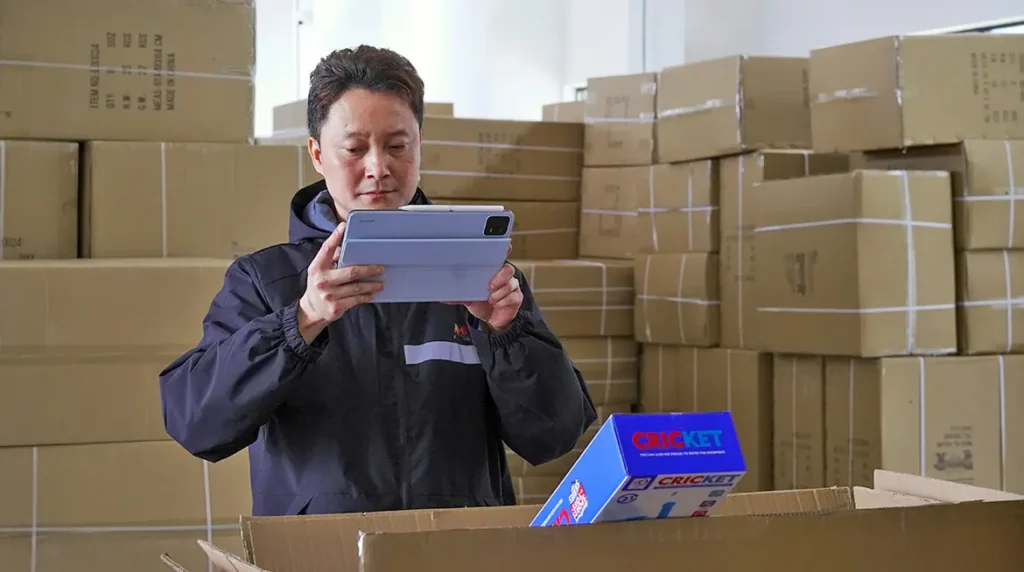
LuluFamily helps toy importers organize packaging requirements before production, including packaging type, artwork, barcode, warnings, carton details, sample confirmation, and inspection points. This helps buyers compare quotations more accurately and reduce packaging-related changes before shipment.
Conclusion
Toy packaging should be treated as part of the product, not as a last-minute decoration.
The right packaging helps control unit cost, shipping volume, product protection, retail display, labeling, and customer experience. The wrong packaging can make a cheap toy expensive after freight, storage, damage, and rework are included.
Before confirming an order, importers should compare packaging options using the same product specification, sales channel, target market, and carton data.
If you are not sure whether your toy order needs bulk pack, retail box, boîte d'affichage, blister card, or custom packaging, prepare the product details first. A clear packaging plan will make supplier quotations more accurate and production easier to control.
Ready to confirm packaging for your toy order?
Contact LuluFamily with your product type, destination market, estimated quantity, and preferred packaging style. We can help compare packaging options and prepare a clearer wholesale toy quotation from China. Contact LuluFamily for toy packaging support.