


Pretend play toys are a strong category for retail stores because they are easy for parents to understand, easy to display, and suitable for different gift-buying situations. For toy importers, wholesalers, and store buyers, the question is not only which toys look attractive. The more important question is which pretend play toys can fit the store’s price range, shelf space, packaging style, and customer demand.
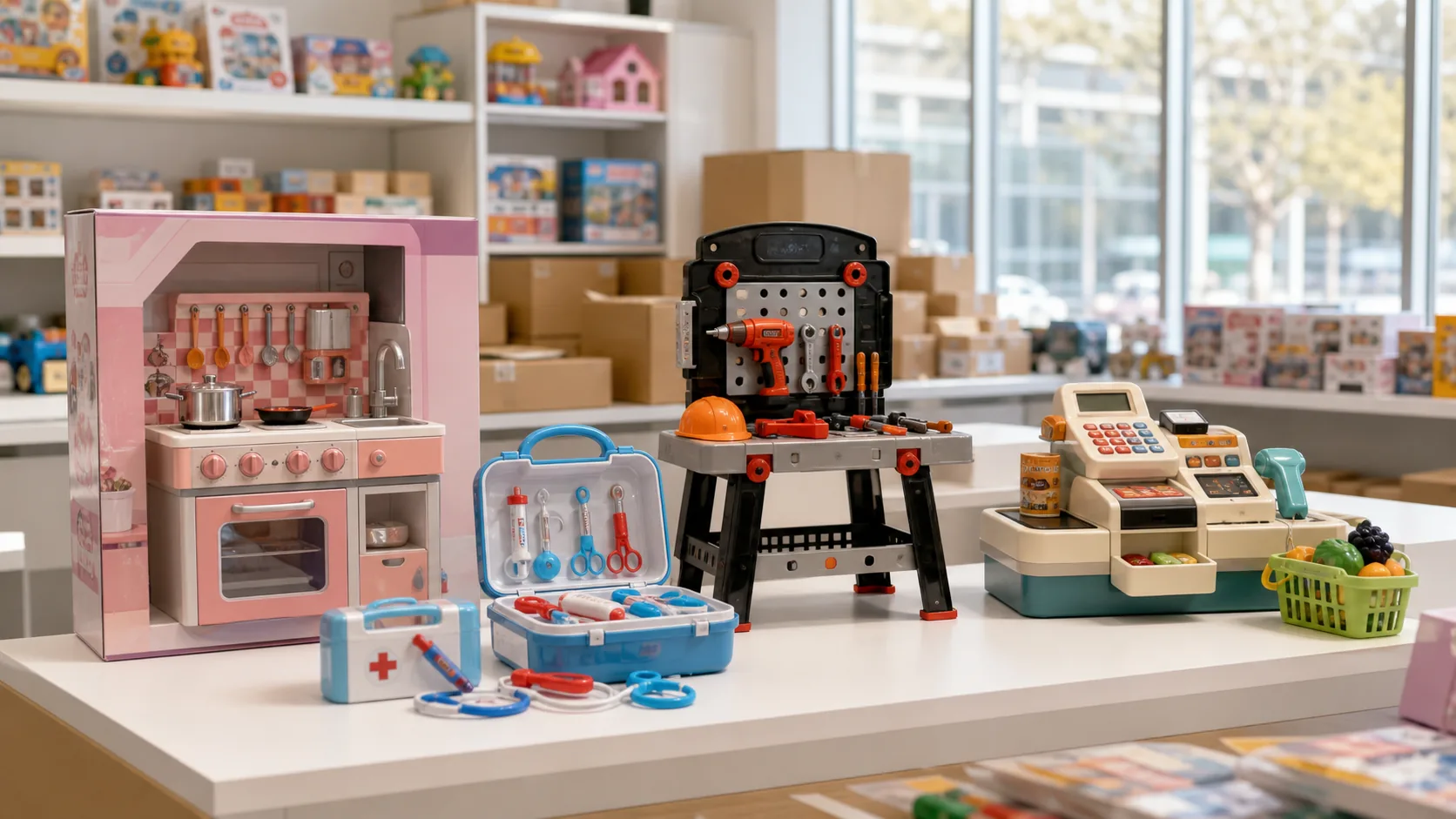
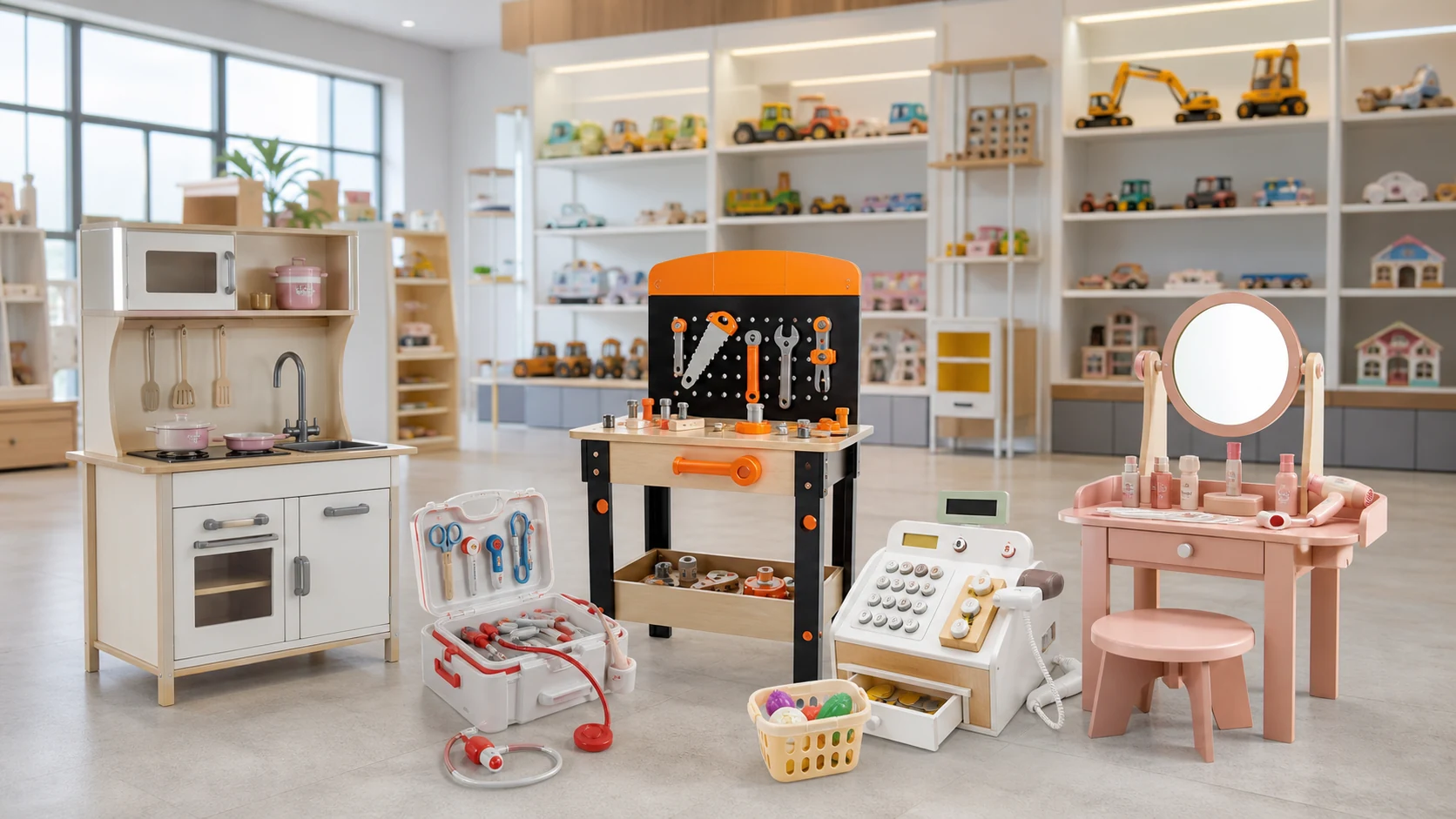
Kitchen sets, doctor kits, and tool benches are three of the most common pretend play toy categories. Each one has a different retail role. Some products work better as eye-catching shelf displays. Some are easier to mix in a wholesale order. Some have higher perceived value but require more attention to carton size and packaging strength.
This guide explains how retail buyers can compare different pretend play toys before placing a wholesale order. It also covers product mix, packaging, MOQ, sample review, and supplier checks.
LuluFamily can help compare kitchen sets, doctor kits, tool benches, packaging options, MOQ, and mixed-order possibilities before you place an order.
Contact LuluFamily about your toy sourcing requirements.
Why Pretend Play Toys Work Well in Retail Stores
Pretend play toys work well in retail stores because they are simple to understand at first sight. A kitchen set, doctor kit, or tool bench does not need a long explanation. Parents and gift buyers can quickly understand what the toy does and how a child may play with it.
This makes pretend play toys useful for several retail channels, including toy stores, gift shops, supermarkets, discount stores, and online shops. A well-designed pretend play product can create strong shelf appeal because the packaging usually shows a clear play scene. For retail buyers, this visual clarity is important. A product that explains itself through packaging is easier to sell than a product that needs too much explanation from store staff.
Pretend play toys also cover different price levels. Small doctor kits and beauty sets can work as lower-price gift items. Medium kitchen sets and supermarket cash register toys can support regular retail sales. Larger tool benches or kitchen play stations may work better as higher-value gift products, especially during holiday seasons or promotional periods.
However, buyers should not choose pretend play toys only by appearance. The best product for a retail store is not always the biggest or most colorful one. Retail buyers need to consider shelf space, carton volume, packaging strength, age grade, small parts, and whether the product can be reordered consistently.
What Retail Buyers Should Consider Before Choosing Pretend Play Toys
Before choosing pretend play toys for a retail store, buyers should think about how the product will be sold, not only how it looks in a catalog. A product that works well for an online seller may not be the best choice for a supermarket shelf. A toy that looks impressive in photos may create problems if the carton volume is too large or the package is easy to damage during shipping.
The first factor is price range. Retail stores usually need a balanced product mix. Low-price pretend play toys can increase impulse purchases. Medium-price sets can become regular shelf items. Higher-price playsets may work as seasonal gifts or promotional products. If a buyer only chooses large sets, the order may look attractive but become difficult to sell across different customer budgets.
The second factor is packaging. For retail stores, packaging is part of the product. A strong color box, clear product image, age label, and visible accessories can improve shelf presentation. For online sellers, packaging also needs to survive warehouse handling and delivery. Buyers should check whether the box is strong enough, whether the product is well fixed inside, and whether the carton packing method is suitable for export.
The third factor is product complexity. Some pretend play toys include many small accessories. These can make the product look valuable, but they may also increase safety checks, packaging work, and customer service issues. Buyers should review the age grade, small parts, material quality, and whether the accessories match the target market.
The fourth factor is order planning. Pretend play toys are often better purchased as a mixed range instead of one single item. A retail buyer may combine kitchen sets, doctor kits, tool sets, cash register toys, and small role-play accessories in one order. This gives the store more display choices and reduces the risk of relying on only one style.
Kitchen Play Sets: Strong Display Value and Broad Appeal
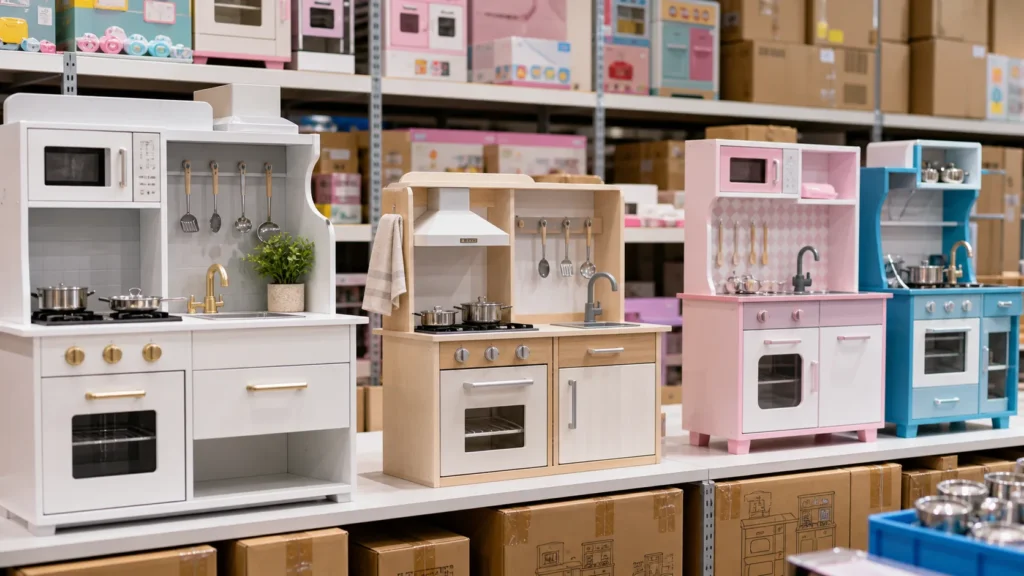
Kitchen play sets are one of the most recognizable pretend play toy categories. They are easy to understand, suitable for many markets, and attractive on retail shelves. For stores that want a visible pretend play section, kitchen sets are often a useful starting point.
Small kitchen sets are suitable for lower-price retail displays, gift shops, and mixed wholesale orders. They usually include simple cookware, food accessories, plates, or utensils. These sets can be easier to ship and easier to test in a new market because the carton volume is usually more manageable.
Medium kitchen play sets can work well for toy stores and supermarkets. They often provide stronger shelf impact because the box can show a complete play scene. Retail buyers should check how many accessories are included, whether the product image matches the actual items inside, and whether the packaging clearly shows the product size.
Large kitchen stations can create high perceived value, but buyers need to be careful. A large product may look impressive, but it can increase freight cost, take more shelf space, and require stronger packaging. Before ordering large kitchen sets in bulk, buyers should review carton size, assembly structure, plastic thickness, and whether the product fits the store’s normal price range.
For buyers building a pretend play section, kitchen sets can connect naturally with other products such as food toys, supermarket sets, tea sets, and cleaning playsets. This makes them useful not only as single products but also as part of a larger retail display.
Doctor Kits: Compact, Giftable, and Easy to Mix
Doctor kits are another strong pretend play category for retail stores. Compared with large kitchen sets or tool benches, doctor kits are usually more compact. This makes them easier to include in mixed wholesale orders and easier to display in smaller retail spaces.
One advantage of doctor kits is that they are easy to position as gift items. Many sets come in color boxes, carry cases, or portable medical bags. This makes the product simple for parents to pick up, understand, and purchase. For gift shops and small toy stores, this can be useful because the product does not require a large display area.
Doctor kits also work well as part of a wider pretend play mix. A buyer can combine several doctor kit styles with kitchen toys, beauty sets, tool toys, and supermarket sets. This gives the store more variety without relying too heavily on large bulky products.
However, buyers should check the accessories carefully. Doctor kits may include small tools, plastic bottles, pretend syringes, glasses, or other small parts. The age grade should be suitable for the target market, and the packaging should clearly show what is included. If the product is sold in markets with strict toy safety rules, buyers should confirm what test documents are available and whether the supplier’s documents match the exact product being ordered.
Doctor kits can be a good choice for retail buyers who want compact pretend play toys with clear use cases, gift value, and flexible order planning.
Tool Benches: Higher Perceived Value but More Packaging Checks
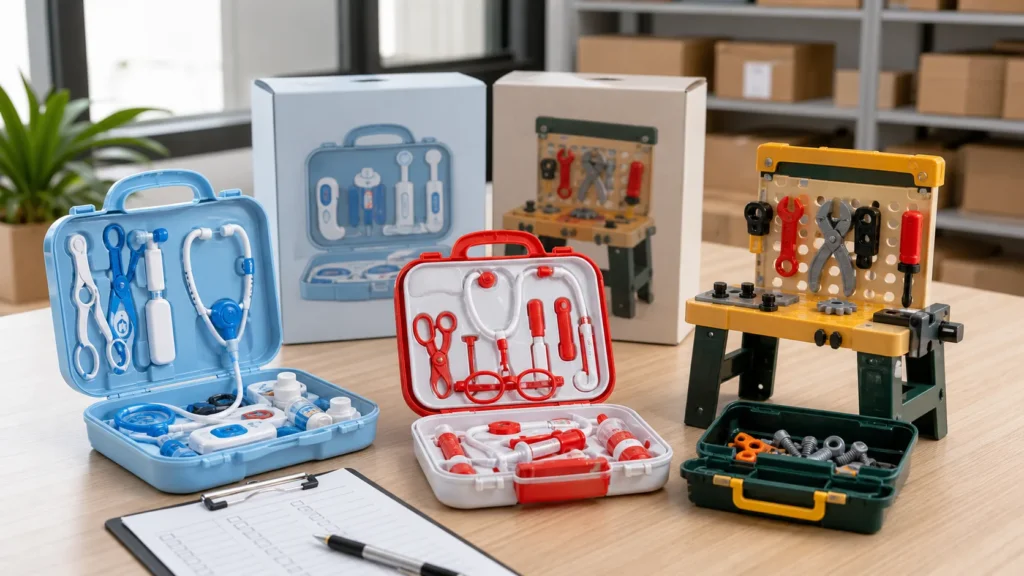
Tool benches and tool sets can give a pretend play toy section a stronger visual balance. While kitchen toys and doctor kits may feel more familiar to many buyers, tool toys often bring a different style to the display. They can be useful for retail stores that want to cover construction, repair, and hands-on play themes.
Small tool sets are easy to mix into wholesale orders. They may include toy hammers, screwdrivers, wrenches, screws, and small tool boxes. These products can work as affordable gift items or add-on products in a retail store.
Larger tool benches usually have higher perceived value. They may include a workbench structure, multiple tools, storage areas, and assembly parts. This type of product can look impressive in photos and on shelves, but buyers need to check the structure carefully before placing a bulk order.
The most important checks include stability, plastic thickness, accessory quality, assembly method, and packaging strength. If a tool bench includes many parts, the buyer should review whether the instructions are clear and whether the parts are packed in a way that reduces missing-piece complaints.
Carton volume is also important. A large tool bench may create better visual value, but if the shipping volume is too high, the landed cost may become less attractive. Retail buyers should compare not only unit price but also carton size, packing quantity, and expected shelf price.
Tool benches are best used as part of a balanced product range. They can support a higher-price section, while smaller doctor kits and kitchen sets help cover lower and medium price levels.
Other Pretend Play Toys Worth Adding to a Retail Mix
Kitchen sets, doctor kits, and tool benches are important, but a retail store should not rely on only three styles. A stronger pretend play section usually includes several smaller and medium-sized items that support different customer needs.
Cash register and supermarket sets are useful because they connect with everyday shopping scenes. Children can play as shopkeepers, customers, or cashiers. For retail buyers, these products often have clear packaging and good shelf communication. They can also be displayed near kitchen toys or food playsets.
Beauty and dress-up sets can work well in gift shops and toy stores. These products usually have strong visual appeal and can be sold at different price levels. Buyers should check accessories, material quality, and whether the design fits the target market.
Cleaning and household playsets are also worth considering. They may not look as exciting as large kitchen stations, but they can be practical additions to a pretend play range. Some markets respond well to familiar household themes because the play pattern is easy to understand.
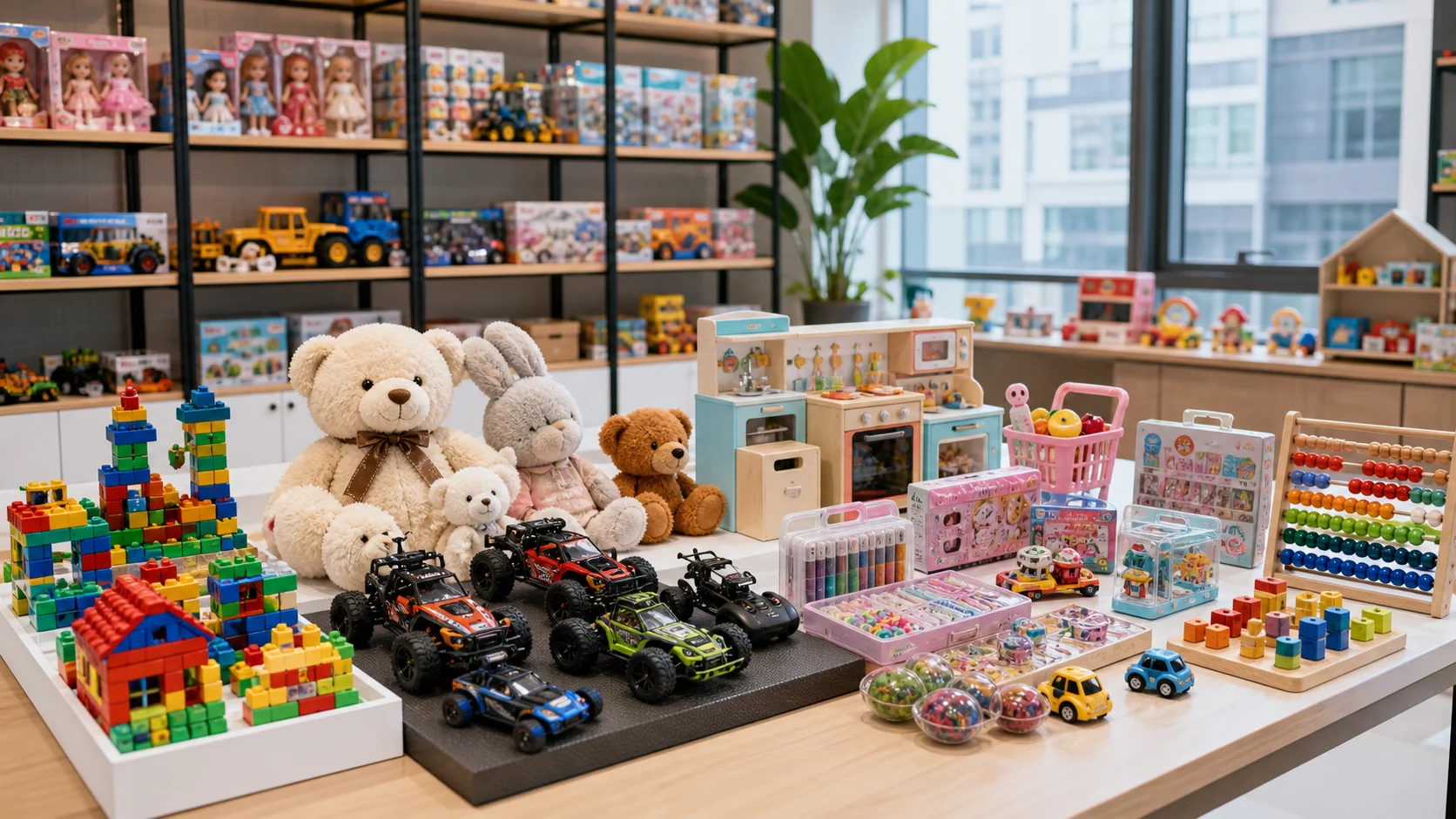
When building a retail product mix, buyers should combine different product roles. One or two larger display items can attract attention. Several medium sets can support regular sales. Smaller kits can help with impulse purchases and mixed-order flexibility.
How to Build a Better Pretend Play Toy Mix for Retail Stores
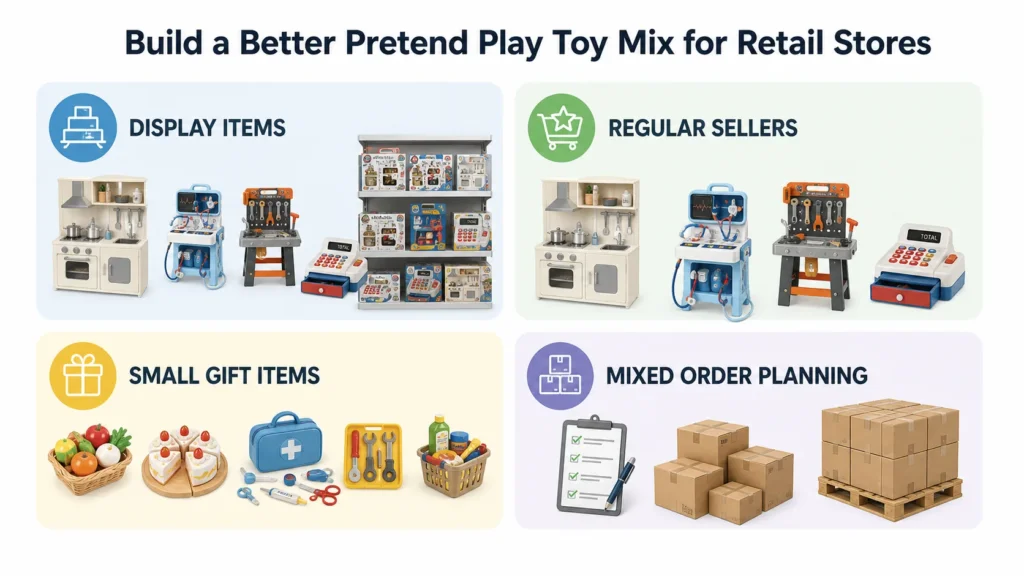
A better pretend play toy mix is not built by choosing only the biggest products or the lowest prices. Retail buyers should build a product range that covers different selling purposes.
A simple structure is to divide the order into three groups. The first group is display products. These may include medium or large kitchen sets, supermarket sets, or tool benches. Their role is to attract attention and make the pretend play section look complete.
The second group is regular selling products. These may include doctor kits, small kitchen sets, tool boxes, beauty sets, and other medium-price items. These products should be easy to understand, easy to display, and suitable for regular restocking.
The third group is small gift items. These products may have lower prices and smaller package sizes. They can help retail stores cover impulse purchases, seasonal promotions, and mixed shelf displays.
Buyers should also think about style balance. If the order includes only kitchen products, the retail display may feel repetitive. If it includes too many large sets, shipping cost and shelf space may become problems. A stronger order usually includes a mix of product size, price range, theme, and packaging format.
For new buyers, it is often better to test a balanced range first instead of ordering a large quantity of one single item. After the first sales feedback, the buyer can reorder stronger styles and remove weaker ones.
Ask LuluFamily to help compare product types, MOQ, packaging size, carton volume, and mixed-order options for kitchen sets, doctor kits, tool benches, and other role-play toys.
For order planning, buyers can also review this guide about MOQ in toy wholesale.
What to Check Before Placing a Wholesale Order
Before placing a wholesale order for pretend play toys, buyers should review more than product photos and unit prices. A low unit price may not be a good deal if the packaging is weak, the carton volume is too large, or the product does not match the target market.
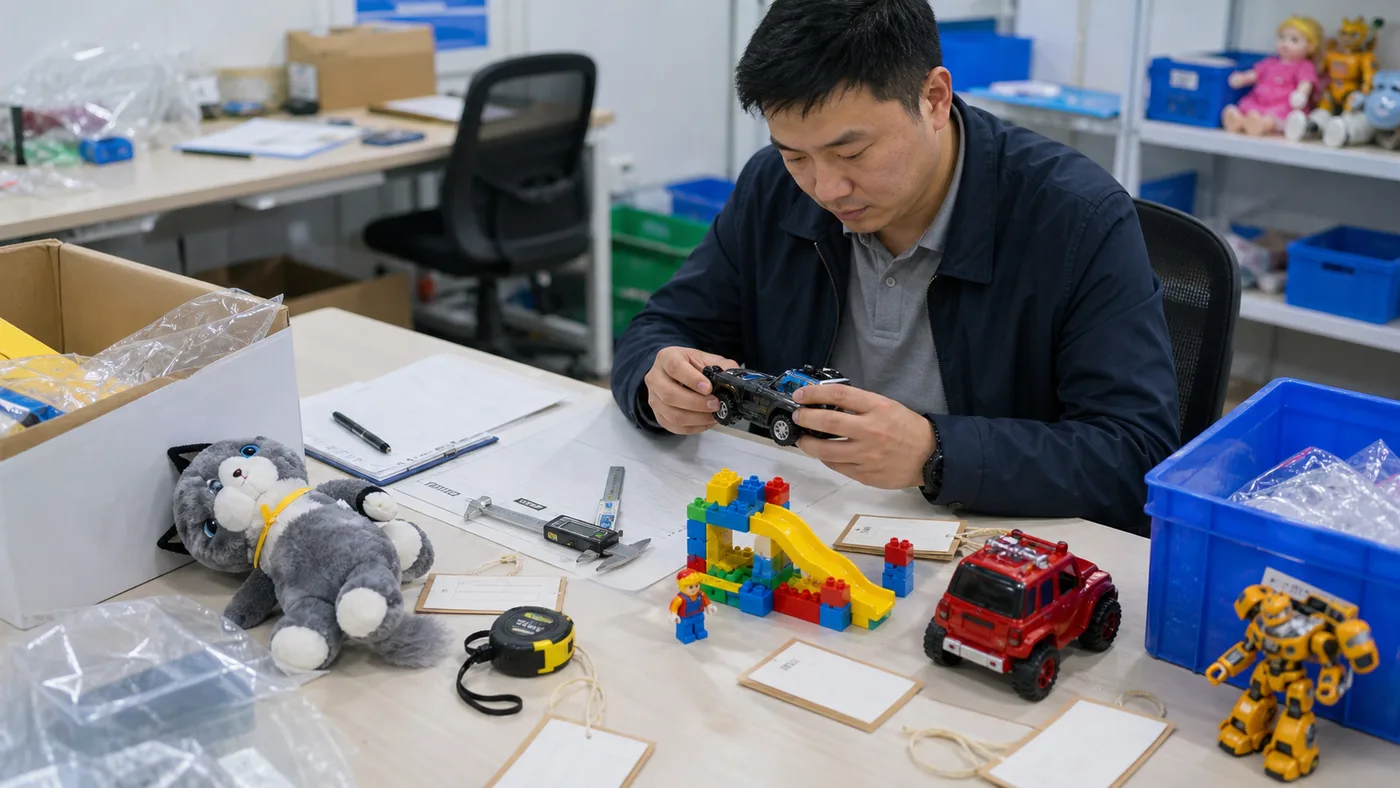
Start with the sample. Check whether the sample matches the product photos, quotation, and packaging information. Review the plastic quality, edges, accessory quantity, color matching, moving parts, and assembly structure. If the product includes many accessories, confirm that the package keeps them organized and reduces the risk of missing parts.
Next, review the packaging. Retail buyers should check color box quality, product image accuracy, age label, barcode needs, warning information, and language requirements. Packaging should support both shelf display and export handling.
Buyers should also compare carton information. Carton size, quantity per carton, gross weight, and packing method can affect freight cost and warehouse handling. This is especially important for large kitchen sets and tool benches.
Finally, confirm supplier communication before paying. A suitable pretend play toy supplier should answer questions clearly, provide product details, explain MOQ and mixed-order rules, and help confirm whether available documents match the products being ordered. For regulated markets, buyers should confirm safety and compliance requirements with qualified professionals or appropriate testing partners.
Suggested internal links:
toy sample checklist before bulk production
Frequently Asked Questions
What are the best pretend play toys for retail stores?
Kitchen play sets, doctor kits, tool benches, supermarket sets, beauty sets, and small role-play kits are common choices for retail stores. The best option depends on price range, shelf space, target age, packaging style, and sales channel.
Are kitchen play sets better than doctor kits?
They serve different retail purposes. Kitchen play sets usually have stronger display value, while doctor kits are more compact and easier to mix in wholesale orders. Many retail buyers include both categories to create a balanced pretend play toy range.
Should retail buyers choose large pretend play sets or small kits?
A balanced mix is usually better. Large sets can attract attention and support higher price points, while small kits help with impulse purchases, gift sales, and mixed-order flexibility.
What should buyers check before ordering pretend play toys in bulk?
Buyers should check samples, packaging strength, accessory quantity, age grade, carton size, MOQ, mixed-order rules, and whether available documents match the exact products being ordered.
Final Thoughts
Pretend play toys can be a valuable category for retail stores, but the best choice depends on more than product appearance. Kitchen sets, doctor kits, and tool benches each have different strengths. Kitchen sets offer strong display value. Doctor kits are compact and easy to mix. Tool benches can support higher perceived value but require more packaging and carton checks.
For retail buyers, the goal is to build a balanced product range. A good pretend play toy order should include different price levels, package sizes, product themes, and selling roles. Before placing a bulk order, buyers should review samples, packaging, carton information, MOQ, and supplier communication carefully.
LuluFamily helps toy importers, wholesalers, distributors, and retail buyers source pretend play toys from China, including kitchen sets, doctor kits, tool benches, supermarket toys, mixed orders, packaging review, and export support.
Contact LuluFamily to get the latest pretend play toy catalog, compare kitchen sets, doctor kits, tool benches, and discuss MOQ, packaging, and bulk pricing.
Contact us to get the latest pretend play toy catalog.