
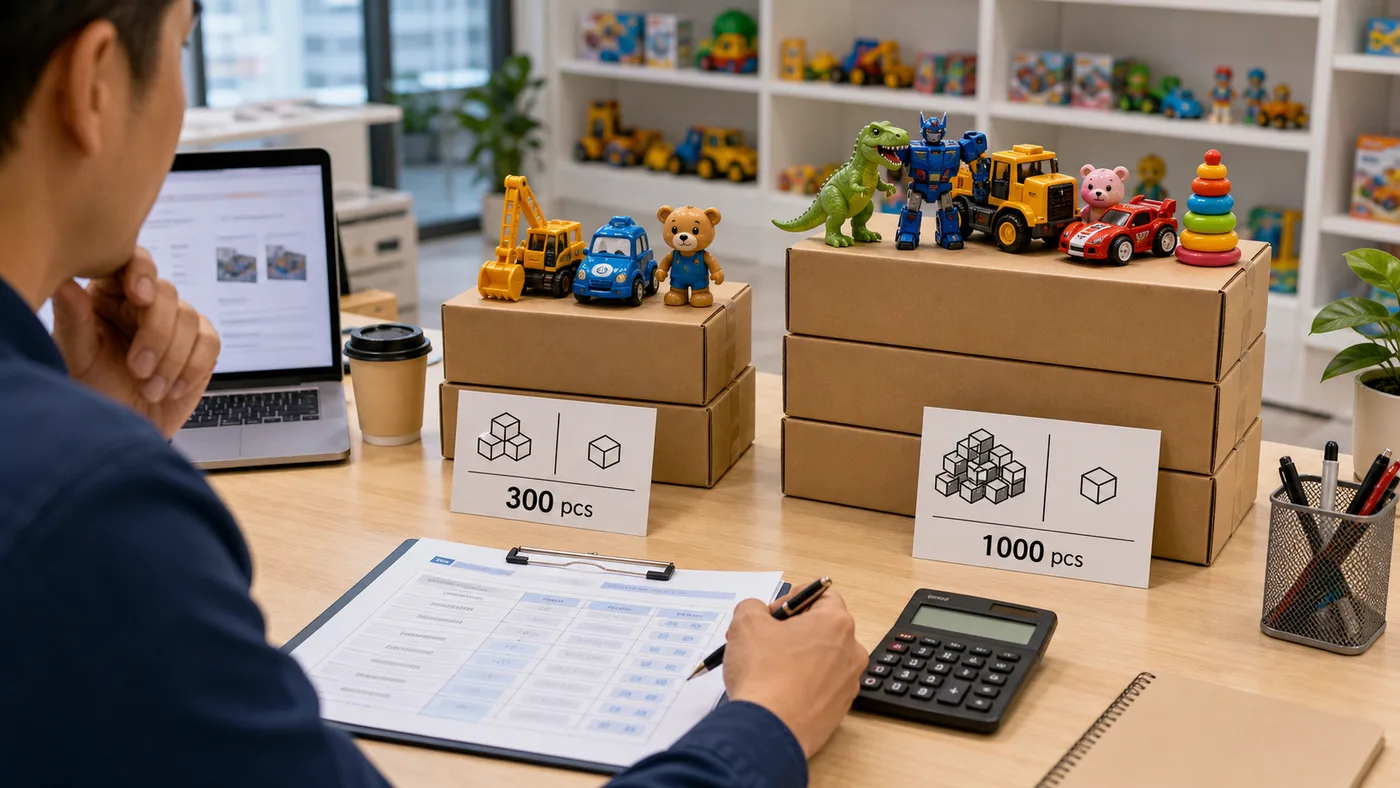

Many toy importers feel relieved when the first sample looks good. The color is close, the function works, the packaging looks fine, and the supplier says production can start.
But a good-looking sample is not the same as a production-ready sample.
Before approving bulk production, buyers should check whether the sample can become a clear production standard. If the sample is approved too quickly, small issues in material, size, function, accessories, packaging, or labels may turn into bigger problems in mass production.
This guide explains what toy importers should check before approving samples for bulk production, especially when sourcing toys from China.
Contact LuluFamily to review product details, packaging, labels, and sample changes before you approve the order.
Why Toy Samples Matter Before Bulk Production
Toy samples are not only for checking whether the product looks nice. They are a bridge between quotation, product specification, packaging requirement, and bulk production.
A sample helps buyers confirm what the supplier is actually going to produce. It can show whether the material matches the quotation, whether the size is correct, whether the function is stable, and whether the packaging matches the order requirement.
This is especially important for toy orders because many small details affect the final product. A slightly loose battery cover, a weak wheel, a missing accessory, unclear warning label, or thin packaging box may not look serious in one sample. But if the same issue appears in 3,000 pieces, it becomes a real problem.
So the question is not just “Do I like this sample?”
The better question is “Can this sample be used as the standard for bulk production?”
Prototype, Pre-Production Sample, and Golden Sample: What Is the Difference?
Not every toy sample has the same purpose.
A prototype is usually an early sample used to check the idea, shape, structure, or basic function. It may not use final materials or final packaging. For custom toys, a prototype helps buyers decide whether the concept is worth developing.
A pre-production sample is closer to the final product. It should use the confirmed material, color, function, accessories, and packaging. This is the sample buyers should check carefully before mass production starts.
A golden sample is the approved reference sample for production and inspection. Once approved, it should be kept safely and used as the standard when checking bulk goods.
For simple wholesale toys, buyers may not always use these exact terms. But the logic is still useful. Early samples help you adjust the product. Final approved samples help you control production.
Do not treat every sample as ready for approval. Ask the supplier what type of sample it is and whether it represents the final production version.
Check Product Appearance and Workmanship
The first check is appearance and workmanship.
Look at the toy from different angles. Check the surface, edges, paint, printing, stitching, glue marks, plastic finish, fabric quality, and visible defects. For toys that will be sold in retail stores or online, appearance affects how customers judge quality before they even use the product.
For plastic toys, check whether the surface is smooth, whether there are sharp edges, rough injection marks, color differences, or weak parts. For plush toys, check stitching, embroidery, filling, fabric texture, and whether the toy shape looks balanced. For printed toys or educational toys, check whether letters, numbers, patterns, and images are clear.
Small workmanship issues may be acceptable for low-cost promotional toys, but not for gift toys, private label toys, or products sold through higher-end retail channels.
This is why buyers should not only ask, “Is the toy usable?” They should also ask, “Will my customer accept this quality level?”
Check Size, Weight, Material, and Color
After appearance, check whether the sample matches the confirmed specification.
Measure the product size. Check the weight. Confirm the material. Compare the color with the approved reference or Pantone color if applicable. If the quotation was based on a specific size or material, the sample should match it.
This matters because small changes can affect both cost and customer experience. A lighter plastic toy may be cheaper, but it may also feel less durable. A smaller product may reduce cost, but customers may feel disappointed if the product photos make it look bigger. A color difference may be fine for some bulk toys, but not for branded products.
For toy sets, also check whether the number of pieces matches the order description. Building blocks, pretend play sets, educational kits, and DIY toys often have multiple parts. One missing part can affect the whole product experience.
If the sample does not match the quotation, ask the supplier to explain the difference before approving production.
Test Function, Assembly, and Play Experience
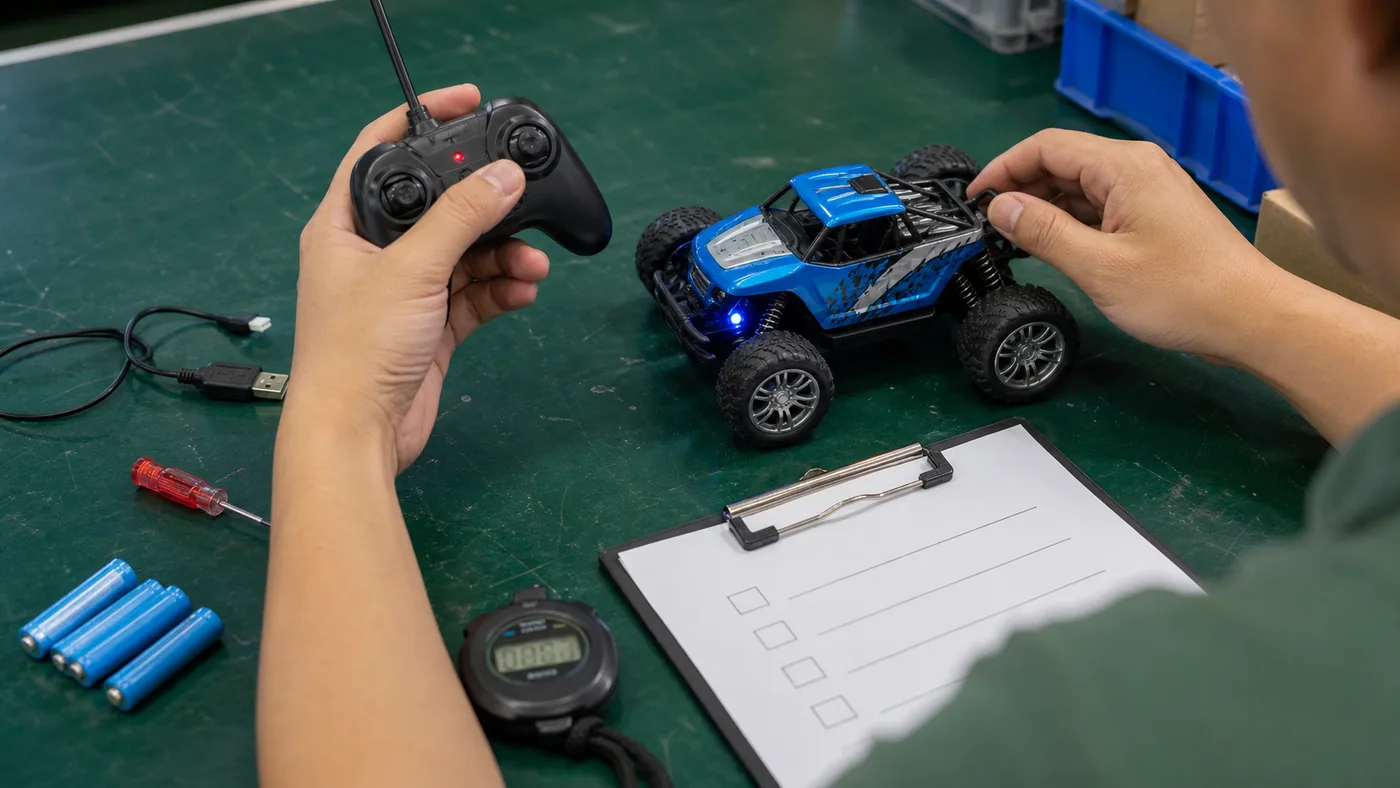
A toy sample should not only look correct. It should work correctly.
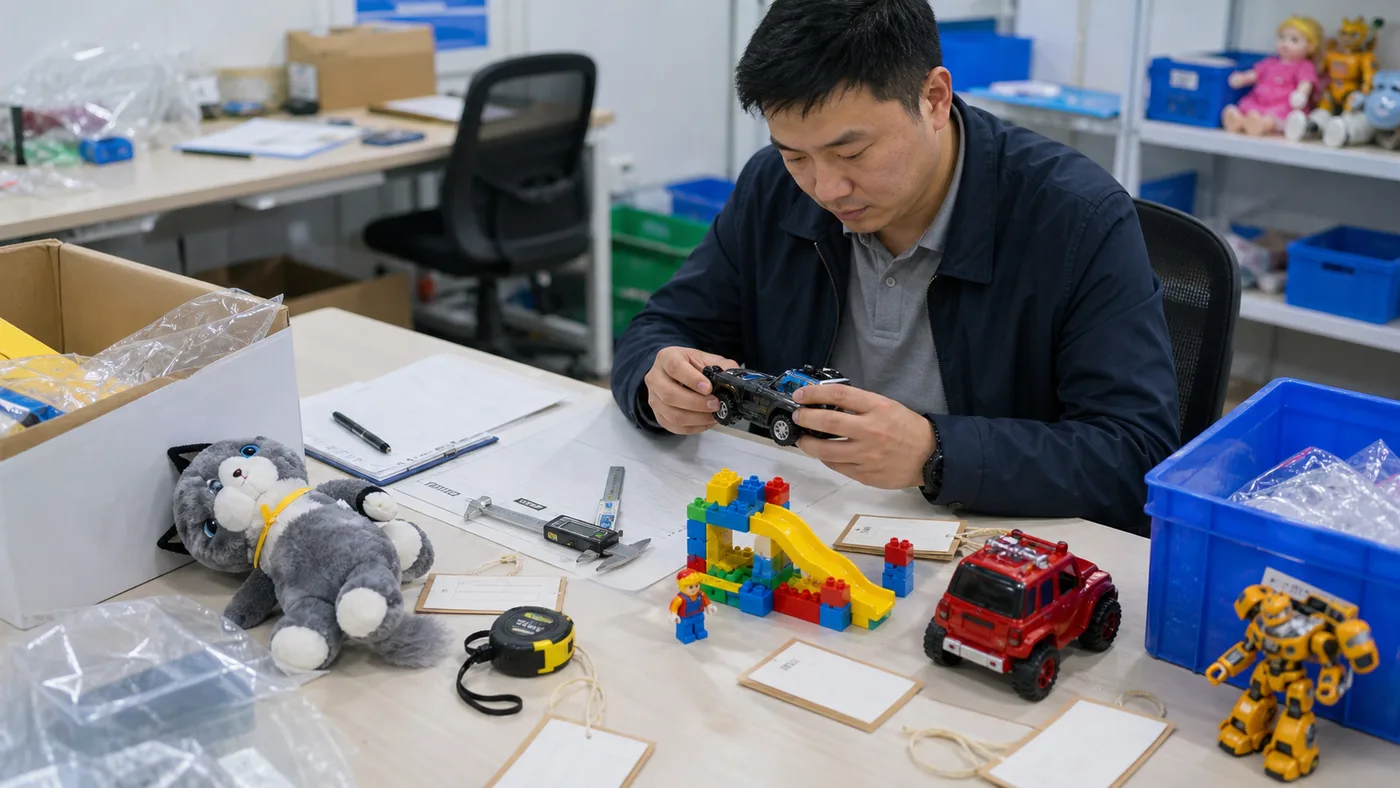
For RC toys, check the remote control, charging, battery position, movement, response distance, lights, sound, and basic durability. For battery-operated toys, test the switch, music, lights, movement, battery compartment, and whether the function stays stable after repeated use.
For building toys, check whether the pieces fit together smoothly and whether the structure is stable after assembly. For pretend play toys, check whether the parts are easy to hold, assemble, and use. For educational toys, check whether the learning function, printed content, and play logic make sense for the target age group.
It is useful to test the sample more than once. Press buttons repeatedly. Assemble and disassemble parts. Open and close covers. Try the product the way a child or parent would actually use it.
Some problems only appear after repeated handling.
If the toy feels difficult, weak, confusing, or unstable during sample testing, it may become a bigger complaint after mass production.
Check Safety Details and Small Parts
Toy safety should be checked before production, not after goods are ready to ship.
Start with visible safety details. Check whether there are sharp edges, loose parts, weak joints, small detachable parts, long strings, unstable battery covers, exposed screws, or rough surfaces. For younger age groups, small parts and choking risks need special attention.
For battery-operated and electronic toys, check the battery compartment. It should be secure and not easy for children to open without proper tools if required by the target market. Also check whether the toy overheats, has unstable wiring, or makes unsafe movements.
Age grading, warning labels, and safety information should also be reviewed at the sample stage. If the product is intended for the U.S., EU, or other regulated markets, buyers should confirm applicable toy safety standards and testing requirements before mass production.
A sample does not replace lab testing. But sample review can help buyers catch obvious safety issues early.
Review Packaging, Labels, and Instructions
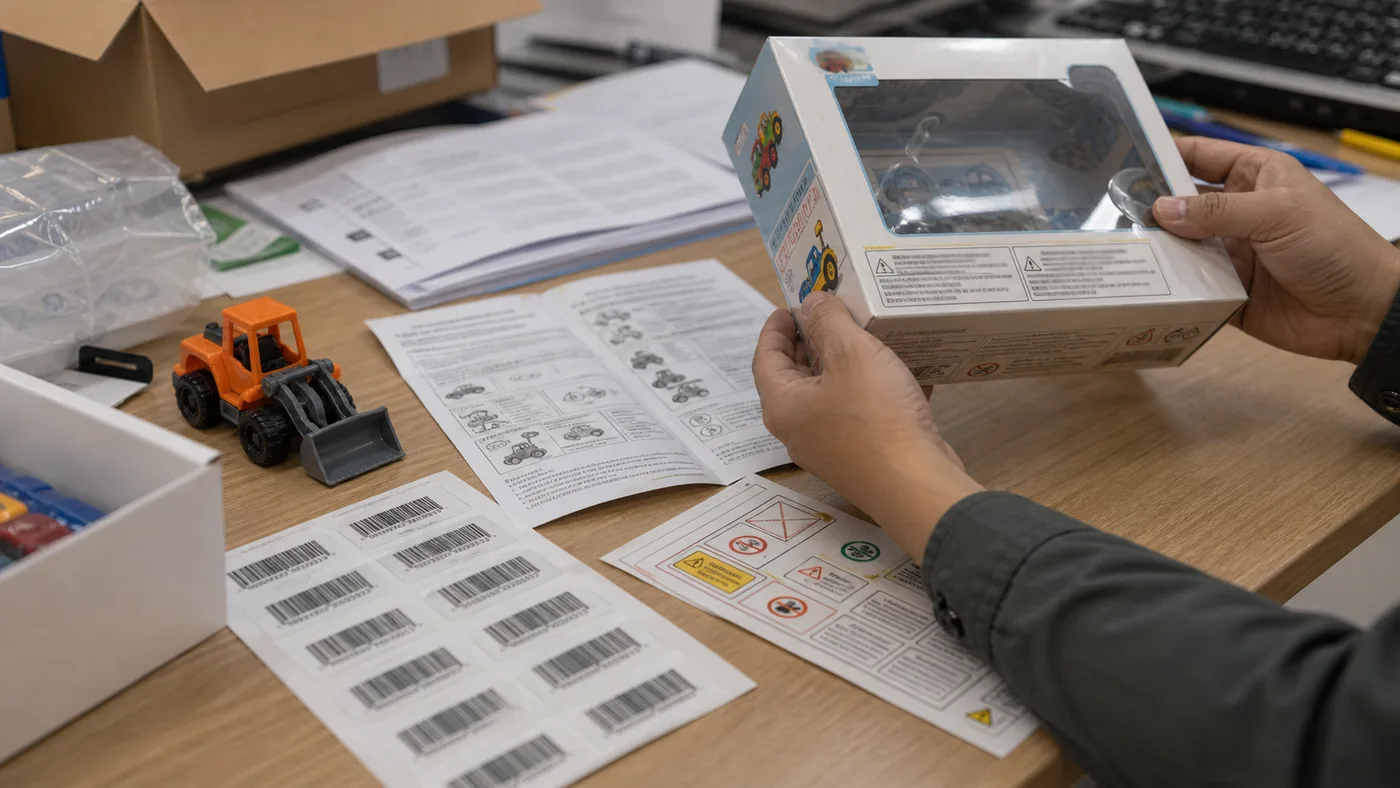
Packaging should be checked together with the toy sample.
Many production problems come from packaging details that were not confirmed early. The toy may be correct, but the retail box may have the wrong size, weak material, unclear printing, missing barcode, incorrect warning label, or wrong product photo.
Check the retail box, display box, poly bag, window box, instruction manual, insert card, barcode sticker, carton label, and any private label elements. Make sure product name, item number, age grade, quantity, country of origin, and warning information are correct.
For online sellers, packaging also affects customer reviews and return rates. For supermarkets and gift shops, packaging affects shelf display. For distributors, carton labels and packing details affect warehouse handling.
If packaging is still not final, do not approve the sample as final production standard. Approve the product sample and packaging sample separately, or clearly record what still needs to be changed.
Confirm Accessories, Spare Parts, and Item Quantity
Accessories are easy to overlook, but they often cause complaints after delivery.
Check whether all accessories are included. This may include batteries, charging cables, remote controllers, stickers, screws, tools, cards, instructions, small parts, spare parts, and display components.
For toy sets, count the pieces carefully. Do not only rely on the supplier’s packing list. Open the sample, lay out all parts, and compare them with the product description, quotation, and packaging information.
For electronic toys and RC toys, check whether the charger, battery type, controller, and spare parts match the target market. For educational toys, check whether all learning cards, printed sheets, or activity pieces are included.
If the sample includes accessories that are not included in the quotation, clarify this before production. If the quotation includes accessories that are missing from the sample, ask the supplier to correct the sample or update the quotation.
Record Changes Before Approving the Sample
Sample approval should not be based on memory.
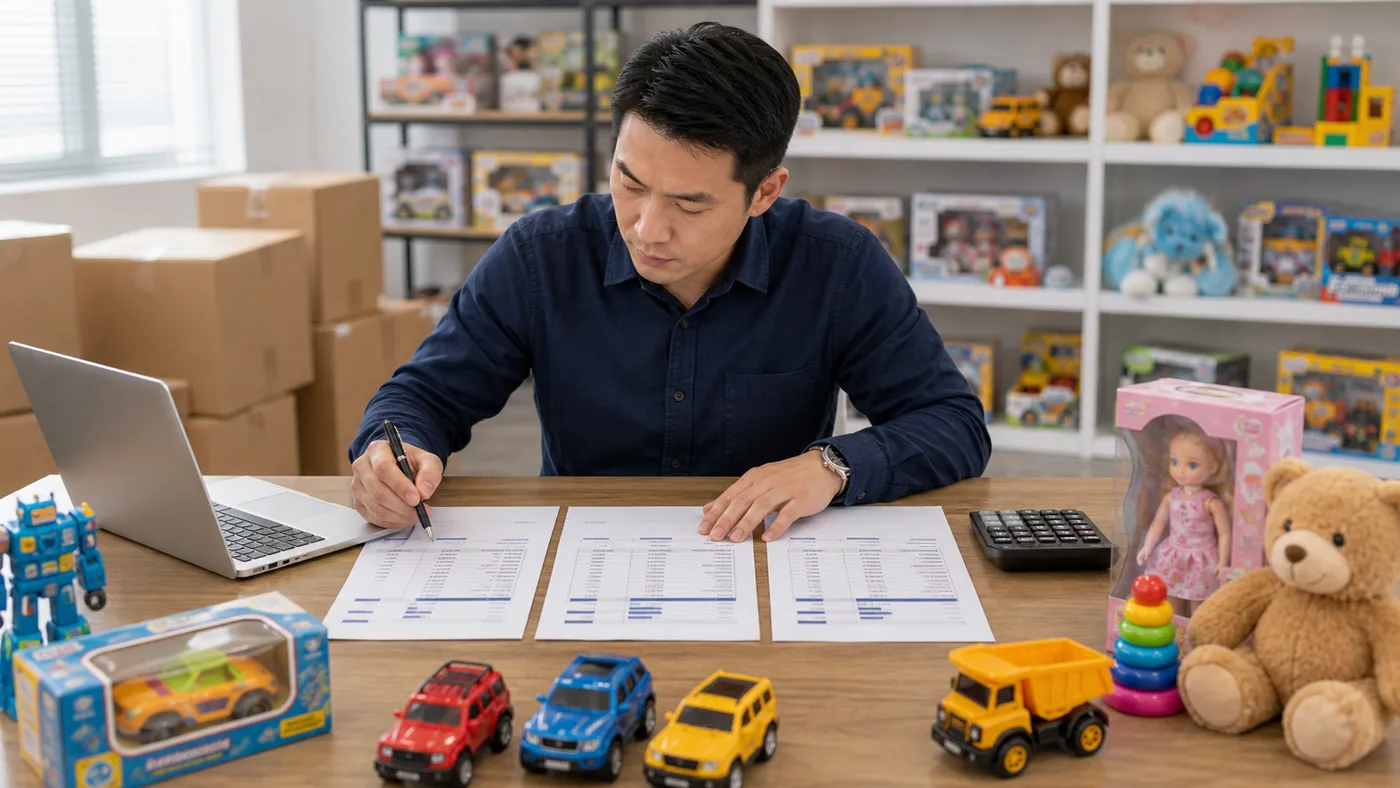
If you ask the supplier to change color, material, packaging, logo position, warning label, accessory quantity, or carton details, write it down. Use photos, marked images, emails, or a simple change list.
This is important because many production mistakes happen after several rounds of small changes. The buyer remembers the latest version. The supplier may still follow an older version. The packaging factory may receive different information from the toy factory.
To avoid this, create one final approval record. It should include sample version, approval date, product photos, packaging photos, confirmed changes, and remaining issues if any.
Before giving final approval, send the supplier a clear message confirming what is approved and what still needs adjustment.
A clear record is not only for the supplier. It also protects the buyer.
Keep Signed and Sealed Samples for Production Reference
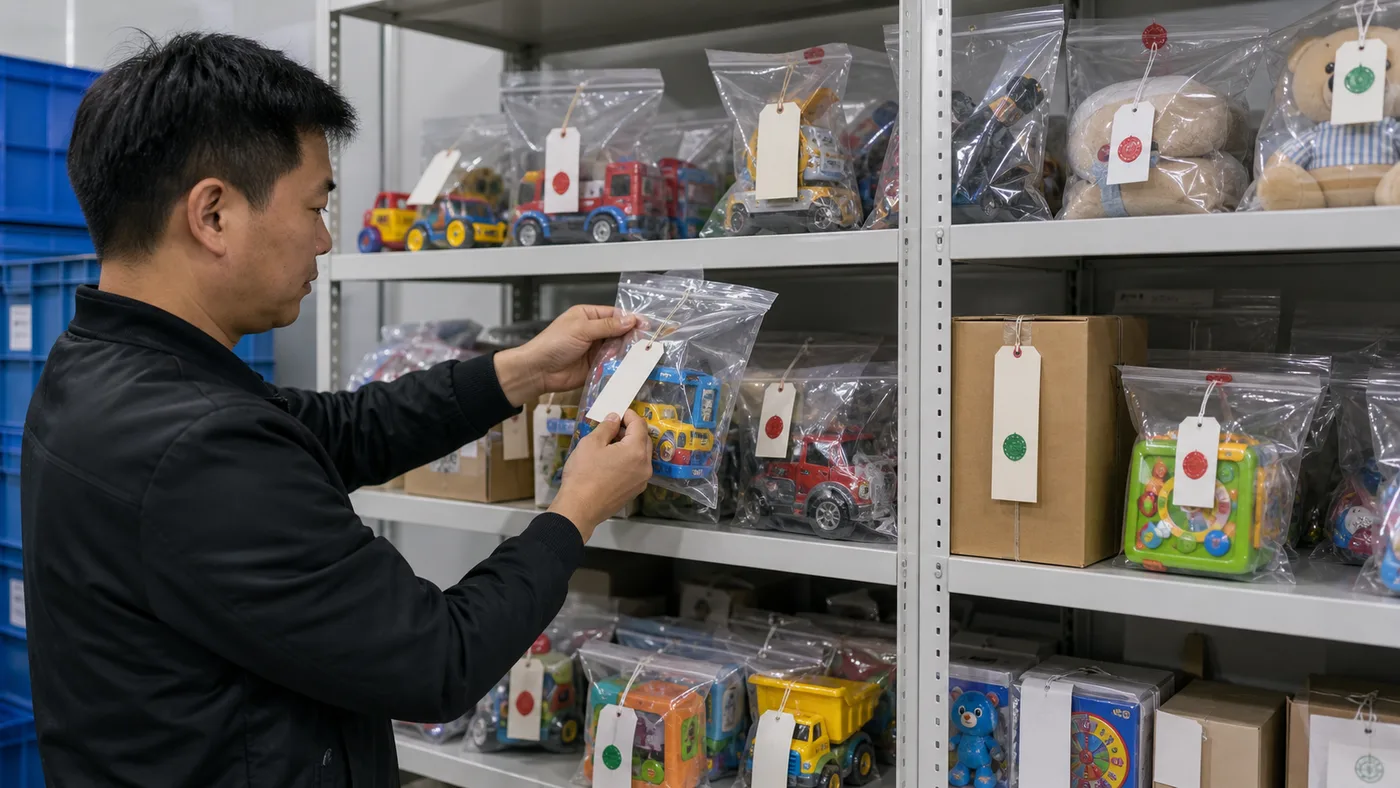
Once the sample is approved, it should be kept as a reference.
For important orders, buyers should ask the supplier to keep a signed and sealed sample. If possible, the buyer should also keep one sample, and the inspection team should use the same approved version as reference.
This approved sample can help avoid disputes during production and inspection. If bulk goods look different from the approved sample, there is a clear standard for comparison.
For larger orders, private label toys, custom packaging, or products with safety requirements, keeping a golden sample is especially important.
Do not approve a sample only through chat messages and then lose track of the physical sample. Photos are useful, but physical samples are often more reliable when checking material, size, color, and workmanship.
The approved sample should answer one simple question during production.
Does the bulk product match this?
Toy Sample Approval Checklist
Before approving a toy sample for bulk production, use this checklist.
Product appearance: surface, color, shape, printing, paint, stitching, glue marks, and visible defects.
Workmanship: smooth edges, strong joints, stable structure, clean finish, and acceptable quality level.
Specification: size, weight, material, color, function, and product version.
Function: buttons, lights, sound, movement, remote control, battery, charging, assembly, and repeated-use stability.
Safety: sharp edges, small parts, loose parts, battery cover, warning labels, age grade, and basic safety risks.
Packaging: retail box, display box, poly bag, instruction manual, barcode, carton label, warning information, and private label details.
Accessories: batteries, charger, controller, stickers, screws, tools, spare parts, cards, and item quantity.
Compliance: required certificates, test reports, tracking labels, market-specific warnings, and safety documents.
Changes: confirmed modifications, photos, marked notes, sample version, and approval date.
Reference sample: signed sample, sealed sample, buyer copy, supplier copy, and inspection reference.
If any important item is still unclear, do not approve the sample as final. Ask the supplier to correct it or record the pending issue clearly.
Already received toy samples from a supplier? Send the sample details to LuluFamily, and our team can help you check whether the sample is ready for bulk production.
How LuluFamily Helps Buyers Check Toy Samples Before Production
LuluFamily helps global buyers source toys from China and communicate with toy factories before bulk production. For many buyers, the challenge is not only finding a toy, but making sure the approved sample can become a reliable production standard.
Based in Shantou, one of China’s major toy supply hubs, LuluFamily can help buyers review toy samples, confirm product details, check packaging requirements, communicate sample changes with factories, and prepare production references.
For buyers working on wholesale toys, mixed toy orders, private label products, or custom packaging, LuluFamily can help reduce confusion between quotation, sample, packaging, and production.
If you already received toy samples and are not sure whether they are ready for bulk production, contact LuluFamily to review the sample details before you approve the order.
Conclusion
Approving a toy sample is not just a formality.
It is one of the most important quality control steps before bulk production. A good sample should confirm product appearance, material, function, safety, packaging, labels, accessories, and any agreed changes.
Do not approve a toy sample only because it looks fine at first glance. Test it, measure it, compare it with the quotation, check the packaging, record changes, and keep a reference sample.
A sample is not just a product on the table. It is the standard your bulk order will follow.
If you are sourcing toys from China and want help checking samples before production, LuluFamily can help you review sample details, communicate changes with factories, and reduce bulk production risk.
LuluFamily can help you review the sample, communicate changes with factories, and reduce bulk order risks.
Contact LuluFamily